Freedom from the Known by Jiddu Krishnamurti
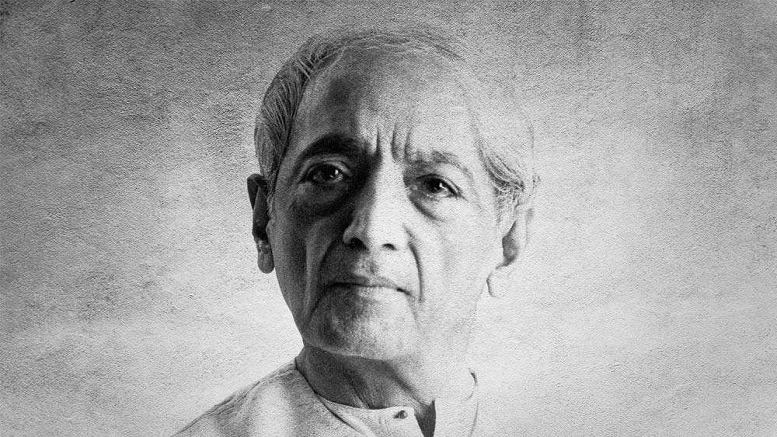
About the author
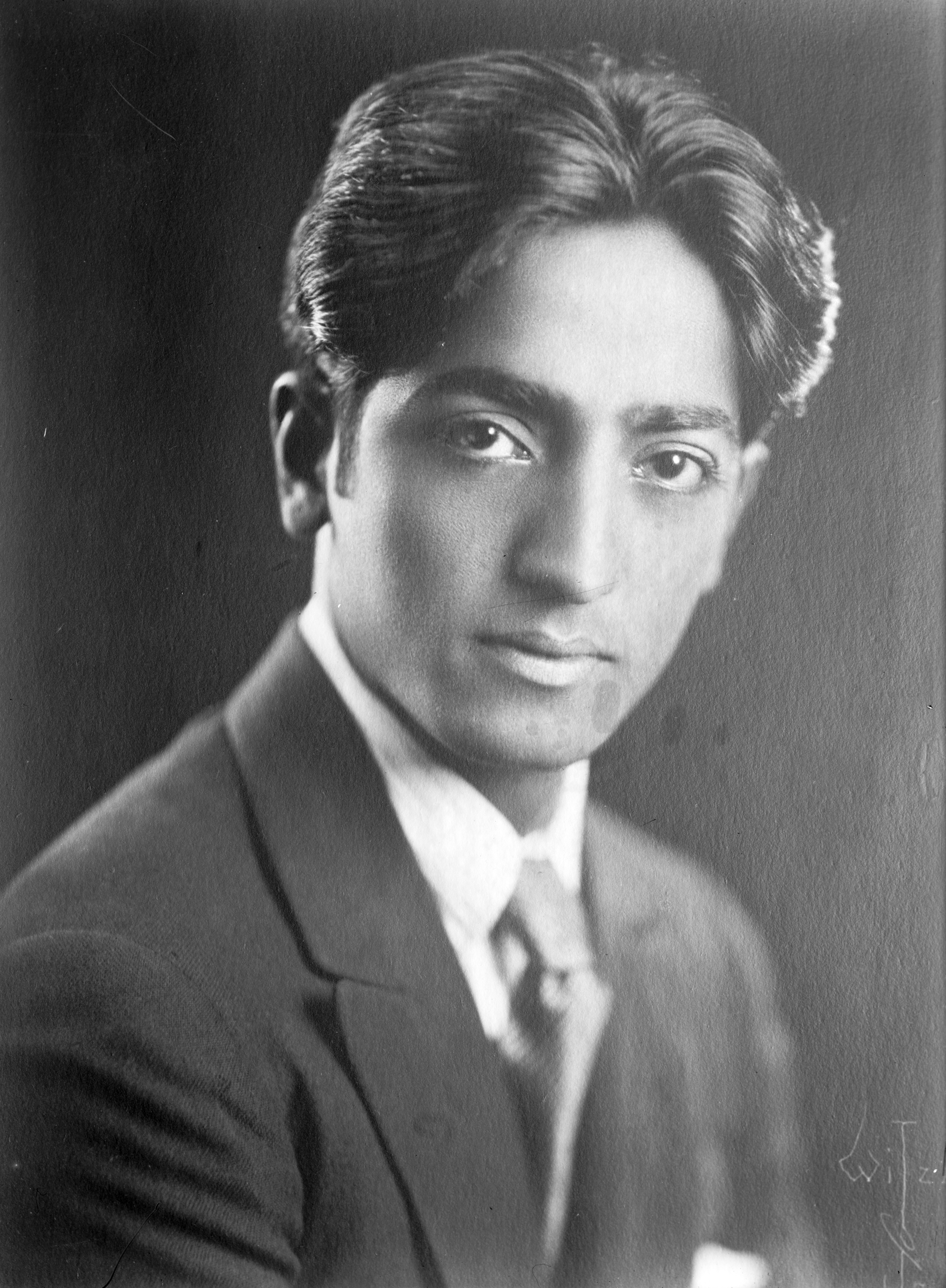 Jiddu Krishnamurti (Copyright: Wikimedia Commons)

Jiddu Krishnamurti (1895-1986) was a leading philosopher, writer and thinker whose ideas continue to influence us today.
Introduction
Jiddu Krishnamurti reveals in his book how humans can free themselves radically and immediately from the tyranny of the known. To alter the structure of society and relationships, humans must change themselves.
Summary
Video Summary "Freedom from the Known" by RAGWise
Table of Contents
- Man’s Search - The Tortured Mind - The Traditional Approach - The Trap of Respectability - The Human Being and the Individual - The Battle of Existence - The Basic Nature of Man - Responsibility - Truth - Self-transformation - Dissipation of Energy - Freedom from Authority (read chapter summary)
- Learning About Ourselves - Simplicity and Humility - Conditioning (read chapter summary)
- Consciousness - The Totality of Life - Awareness (read chapter summary)
- Pursuit of Pleasure - Desire - Perversion by Thought - Memory - Joy (read chapter summary)
- Self-concern - Craving for Position - Fears and Total Fear - Fragmentation of Thought - Ending of Fear (read chapter summary)
- Violence - Anger - Justification and Condemnation - The Ideal and the Actual (read chapter summary)
- Relationship - Conflict - Society - Poverty - Drugs - Dependence - Comparison - Desire - Ideals - Hypocrisy (read chapter summary)
- Freedom - Revolt - Solitude - Innocence - LIving with Ourselves as We Are (read chapter summary)
- Time - Sorrow - Death (read chapter summary)
- Love (read chapter summary)
- To Look and to Listen - Art - Beauty - Austerity - Images - Problems - Space (read chapter summary)
- The Observer and the Observed (read chapter summary)
- What is Thinking? - Ideas and Action - Challenge - Matter - The Beginning of Thought (read chapter summary)
- The Burdens of Yesterday - The Quiet Mind - Communication - Achievement - Discipline - Silence - Truth and Reality (read chapter summary)
- Experience - Satisfaction - Duality - Meditation (read chapter summary)
- Total Revolution - The Religious Mind - Energy - Passion (read chapter summary)
My Notes
Chapter 1
Man’s Search - The Tortured Mind - The Traditional Approach - The Trap of Respectability - The Human Being and the Individual - The Battle of Existence - The Basic Nature of Man - Responsibility - Truth - Self-transformation - Dissipation of Energy - Freedom from Authority
- We are second-hand people
- The primary cause of disorder in ourselves is the seeking of reality promised by another.
- Immaturity lies only in total ignorance of self. To understand yourself is the beginning of wisdom.
- A confidence man is a dead man.
- Order imposed from without must always breed disorder.
Chapter 2
Learning about Ourselves and Conditioning
- Leaders destroy the followers and followers destroy the leaders. You have to be your own teacher and your own disciple.
- Acquiring knowledge about yourself and learning about yourself are two different things, for the knowledge you accumulate about yourself is always of the past.
- A mind that is burdened with the past is a sorrowful mind.
- To understand anything you must live with it, you must observe it, you must know all its content, its nature, its structure, its movement. Have you ever tried living with yourself?
- Each of us has an image of what we think we are or what we should be, and that image, that picture, entirely prevents us from seeing ourselves as we actually are.
- If there is no certainty, no achievement, there is freedom to look, to achieve. And when you look with freedom it is always new.
- Only when there is an emotional content do you become vital.
Chapter 3
Consciousness — The Totality of Life — Awareness
- Consciousness is the total field in which thought functions and relationships exist.
- Attention is not the same thing as concentration. Concentration is exclusion; attention, which is total awareness, excludes nothing.
- Verbally we can go only so far: what lies beyond cannot be put into words because the word is not the thing.
Chapter 4
Pursuit of Pleasure – Desire – Thought – Memory – Joy
- Pleasure is the structure of society.
- There is nothing wrong with desire. To react is perfectly normal. But then thought steps in and chews over the delight and turns it into pleasure.
- A mind which is not crippled by memory has real freedom.
- It is the struggle to repeat and perpetuate pleasure which turns it into pain.
Chapter 5
Self-concern – Position – Fear – Fragmentation of Thought
- Most of us crave the satisfaction of having a position in society because we are afraid of being nobody.
- A mind that is caught in fear lives in confusion, in conflict, and therefore must be violent, distorted and aggressive.
- The movement from certainty to uncertainty is what I call fear.
- There is no new thought. If we recognise it, it is already old.
- When you are confronted with something immediately there is no fear. It is only when thought comes in that there is fear.
- Most of us want to have our minds continually occupied so that we are prevented from seeing ourselves as we actually are.
Chapter 6
Violence – Ideal and Actual
- Violence is not merely killing another. It is violence when we use a sharp word, when we make a gesture to brush away a person, when we obey because there is fear.
Chapter 7
Relationship – Poverty – Dependence
- Relationship between human beings is based on the image-forming, defensive mechanism.
- Man has accepted conflict as an innate part of daily existence because he has accepted competition, jealousy, greed, acquisitiveness and aggression as a natural way of life.
- Poverty is to be completely free of society.
- All stimulation, whether of the church or of alcohol or of drugs or of the written or spoken word, will inevitably bring about dependence, and that dependence prevents us from seeing clearly for ourselves and therefore from having vital energy.
- Contradiction exists when there is comparison.
- Effort is a dissipation of passion.
- Any conflict is a dissipation of energy.
- It is not the objects of desire but the very nature of desire which is contradictory.
- Inaction is complete action.
Chapter 8
Freedom – Solitude
- To see is to act and to be free
- To be alone you must die to the past.
- You cannot become free gradually. It is not a matter of time.
Chapter 9
Time – Sorrow – Death
- Man lives by time.
- Problems exist only in time, that is when we meet an issue incompletely. This incomplete coming together with the issue creates the problem.
- Time is the interval between idea and action.
- There is the idea, the interval and action. And in that interval is the whole field of time. That interval is essentially thought.
- The interval between the living and the dying is fear.
- Freedom from the known is death, and then you are living.
Chapter 10
Love
- When you feel separate from another there is no love.
- When one loves there must be freedom, not only from the other person but from oneself.
- Love is not the product of thought which is the past.
- In duty there is no love.
Chapter 11
To Look and to Listen
- If your eyes are blinded with your worries, you cannot see the beauty of the sunset.
TODO: Chapter 12
The Observer and the Observed
- When you look at a tree, the observer is the censor, the experiencer, the thinker, the background of many thousand yesterdays.
- The observer is the observed.
- When the observer understands the structure and nature of itself, there is observation without division.
- As long as there is this division, time will go on, and time is sorrow.
- One who will understand the end of sorrow must understand this, must go beyond the duality between the thinker and the thought, the experiencer and the experienced.
Chapter 13
What is Thinking?
- Ideas have become far more important to us than action.
- Thought is the breeder of duality in all our relationships.
- Those who think a great deal are very materialistic because thought is matter.
- A new fact cannot be seen by thought.
- If there is an awareness of how thought begins then there is no need to control thought.
Chapter 14
The Burdens of Yesterday (= the Past) - The Quiet Mind - Communication - Achievement - Discipline - Silence - Truth and Reality
- It is only when we give complete attention to a problem and solve it immediately – never carrying it over to the next day, the next minute – that there is solitude.
- It is only when the mind is silent that there is a possibility of clarity.
- One of the greatest stumbling blocks in life is this constant struggle to reach, to achieve, to acquire.
- Control in any form, like suppression, produces only conflict.
- To study the whole psychological structure of authority within ourselves there must be freedom.
- What can be described is the known, and the freedom from the known can come into being only when there is a dying every day to the known.
Chapter 15
Experience — Satisfaction — Duality — Meditation
- This demand for more and more experiences shows the inward poverty of man.
- Demand is born out of duality: ‘I am unhappy and I must be happy’. In that very demand that I must be happy is unhappiness.
- Meditation is not following any system; it is not constant repetition and imitation.
- Meditation is the understanding of the totality of life in which every form of fragmentation has ceased.
- Meditation is not control of thought, for when thought is controlled it breeds conflict in the mind.
- That very understanding of the structure of thinking is its own discipline which is meditation.
- Love cannot be cultivated by thought.
Chapter 16
Total Revolution — The Religious Mind — Energy — Passion
- The religious mind is something entirely different from the mind that believes in religion.
- A man who knows what it is to have humility is a vain man.
Get the Book
Buy the book on Amazon.
Audiobook
Liked the summary? Here is the full audiobook:
Audiobook of "Freedom from the Known"
Timestamps for audiobook:
- (0:00) The Basic Nature of Man
- (29:16) Learning about ourselves
- (48:41) Consciousness
- (1:00:07) Pursuit of pleasure
- (1:10:06) Self-concern
- (1:31:15) Violence
- (1:50:17) Relationship, conflict
- (2:09:32) Freedom, revolt, solitude
- (2:18:45) Time, sorrow, death
- (2:32:22) Love
- (2:53:10) To look and to listen
- (3:09:02) The observer and observed
- (3:17:46) What is thinking
- (3:29:14) The burdens of yesterday
- (3:40:42) Experience
- (3:54:16) Total revolution
Helpful Resources
- Wikipedia Article
- Book Summary by Reading.Guru
- Book Summary from Ranjit Saini
- Book Review from Shane Dowling
Suggestions for improvement? Feel free to send me your feedback via email.